Tempe Futures 2050
Civic platform + community pop-ups shaping Tempe's 30-year plan.
"How do you make 30-year city planning feel personally relevant to someone who has never been asked to participate before?"
The City of Tempe needed to engage diverse community members in long-range 2050 planning covering sustainability, workforce, smart infrastructure, and e-waste. Traditional engagement methods — town halls, paper surveys — weren't reaching the people who would actually live in that future.
I was brought in through ASU's Project Cities program under Professor Andrew Whitcomb's DSC 598 Design Management & Leadership course, working directly with the City of Tempe (PM Alison Almand).
From the start I knew the brief wasn't really "run more workshops." It was "make the future feel like something a stranger at a farmers market wants to talk about for ten minutes."
Designed and facilitated interactive pop-up events across Tempe. Developed survey instruments. Engaged 300+ community members in participatory design activities. Coordinated open house at Tempe Public Library.
Proposed e-waste career pathways connecting sustainability with Tempe's semiconductor industry. Synthesized student insights into thematic future scenarios. Collaborated with city officials. Presented final research findings to Mayor and City Council.
- 01Aug–Oct 2024
Community Pop-Up Events
"I didn't wait for people to come to us."
We designed interactive pop-up stations at ASU campus, South Mill Ave farmers market, and neighborhood parks — meeting residents where they already were. Flash-card prompts sparked conversations about what Tempe should look like in 2050.
What I didFacilitated 5+ events. Collected 127 signals across 8 themes from 300+ residents.
What I learnedThe most powerful insights came from a 62-year-old resident at a farmers market, not a formal session. Informal spaces unlock authentic answers.
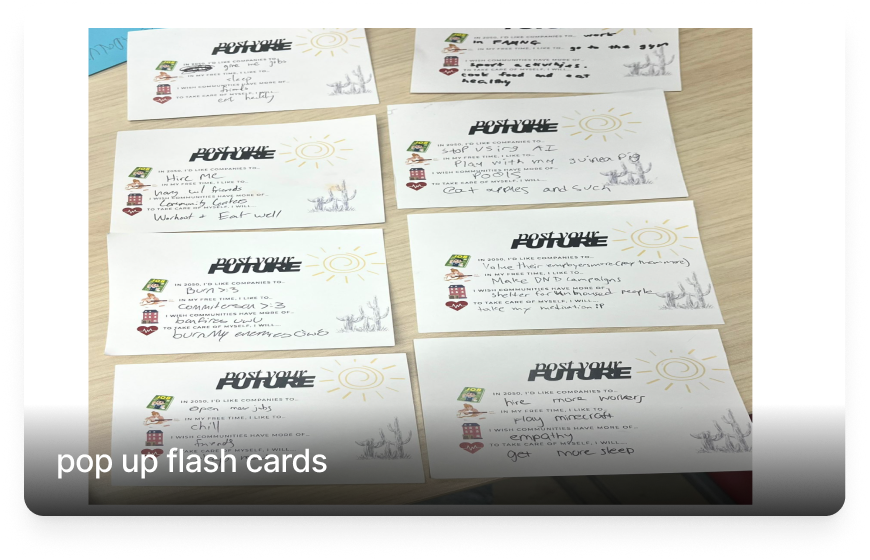
Flash-card prompts used to spark 2050 conversations. 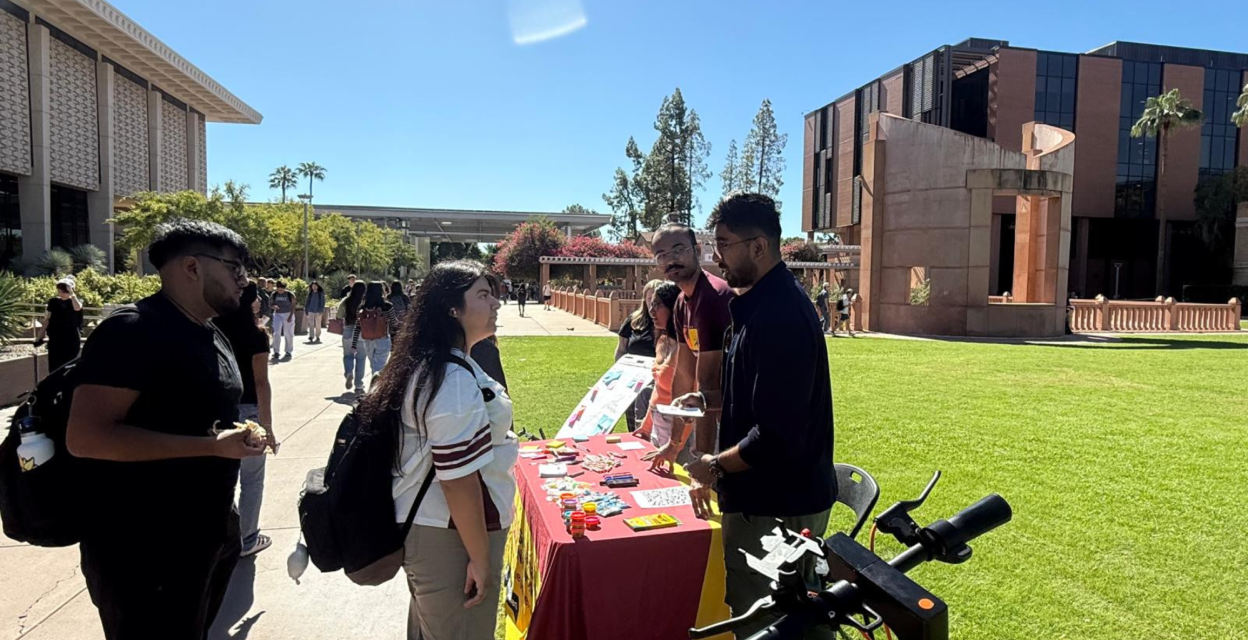
Pop-up station at ASU campus. - 02Sept–Oct 2024
Survey Design & Signal Collection
"85% completion — because we met people where they were."
We developed structured survey instruments to capture community values, concerns, and preferences at scale. The high completion rate validated our approach of going to neighborhoods rather than expecting people to come to us.
127 signals collected8 themes identified15 key insightsWhat I learnedKey signal categories — Career Pathways (jobs for young graduates), Heat Adaptation (tech + nature-based solutions), Retention Factors (what makes people stay), Infrastructure Needs (transit, cooling, green corridors).
Synthesis of 127 signals into 8 themes and 15 insights. - 03Oct 2024
City Panel Discussion
"City officials gave us the reality check we needed."
Event 1 — We presented our collected signals to department heads across Transportation, Police, Economic Development, Career Services, Sustainability, and Community Services. Our first reality check on what was feasible, what faced regulatory barriers, and where budget aligned.
What I didI presented career-focused signals — especially the e-waste/semiconductor opportunity. City feedback directly shaped how we developed AI Pioneers vs Green Innovators.
"The panel discussion was pivotal. City feedback directly shaped how we developed AI Pioneers vs Green Innovators — grounding speculative futures in real-world constraints."
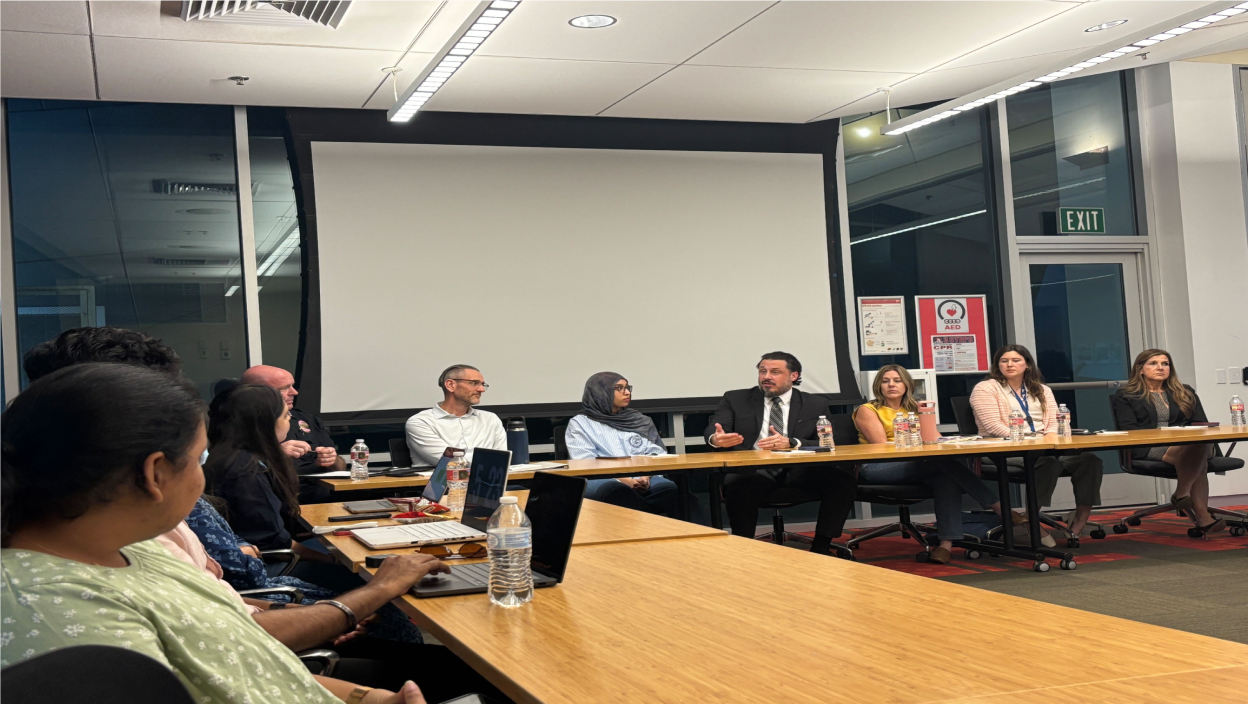
Presenting signals to Tempe department heads. - 04Oct–Nov 2024
From Signals to Scenarios
"We chose two divergent futures — not to pick one, but to reveal what people actually wanted."
After City Panel feedback, we created two scenario visions. 🤖 AI Pioneers — autonomous cooling networks, AI-optimized urban planning, smart career pathways in tech. 🌱 Green Innovators — urban forest expansion, e-waste career pathways (my focus), community cooling gardens.
What I didI contributed e-waste/semiconductor career pathway specifics for both scenarios, with focus on Green Innovators. Iterative refinement based on team feedback, professor guidance, and visual materials for community testing.
Scenario boards used at community testing. - 05Nov 16, 2024
Open House at Tempe Public Library
"180+ people. 89% wanted a hybrid approach. That changed everything."
Event 2 — We tested both scenarios with real community members through 4 activities: 1–10 scale rating, map marking exercise, preference questions, concerns & hopes.
180+ participants62% preferred Green Innovators47 locations marked on map89% wanted hybrid approachWhat I didI facilitated Green Innovators discussions, explaining e-waste career pathways and engaging residents in conversations about sustainable futures.
What I learnedPeople wanted HYBRID approaches — not either/or thinking. This reframing became our final recommendation.
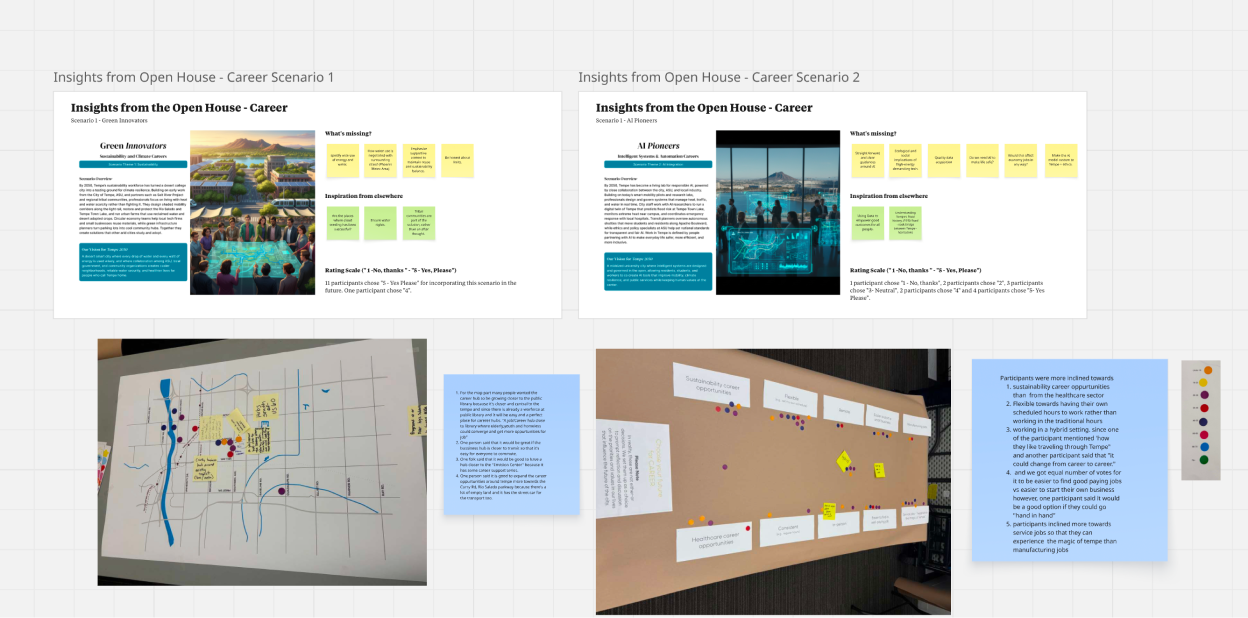
Open House at Tempe Public Library (Nov 16, 2024). - 06Dec 7, 2024
City Council Presentation
"Standing in front of the Mayor of Tempe with research I'd gathered from farmers markets."
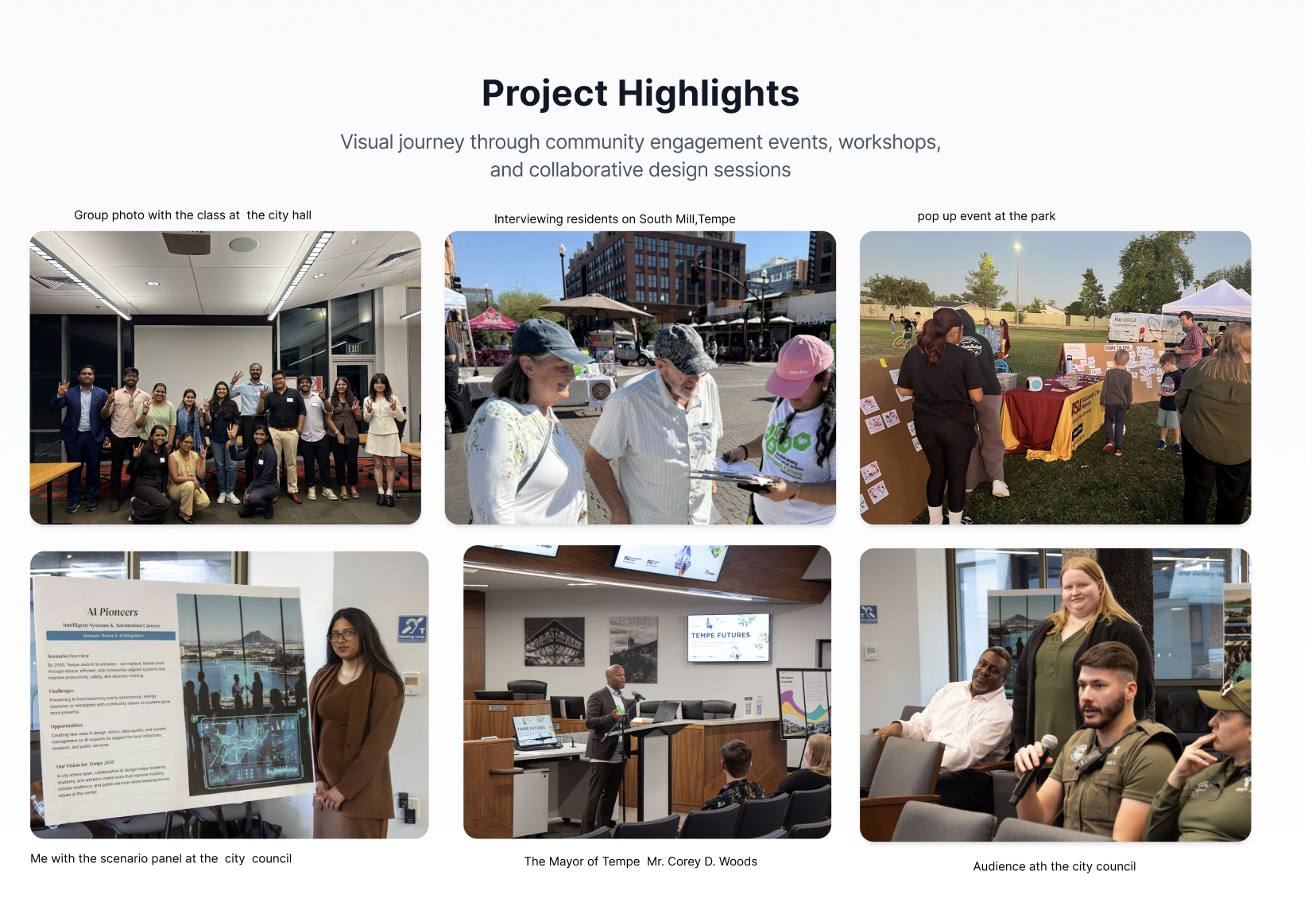
Event 3 — The culminating event at City Hall. We presented to Mayor Corey D. Woods, City Council members, department heads, Professor Whitcomb, and Alison Almand — bringing the full research cycle to completion.
What I didPresented the e-waste/semiconductor career pathway. Connected it to Green Innovators scenario. Showed community validation data from Open House. Made the case for priority career development investment.
What I learnedCity officials responded positively to the hybrid approach. Informed 2025 budget priorities. Pilot programs in development. Integration into 2050 master plan.
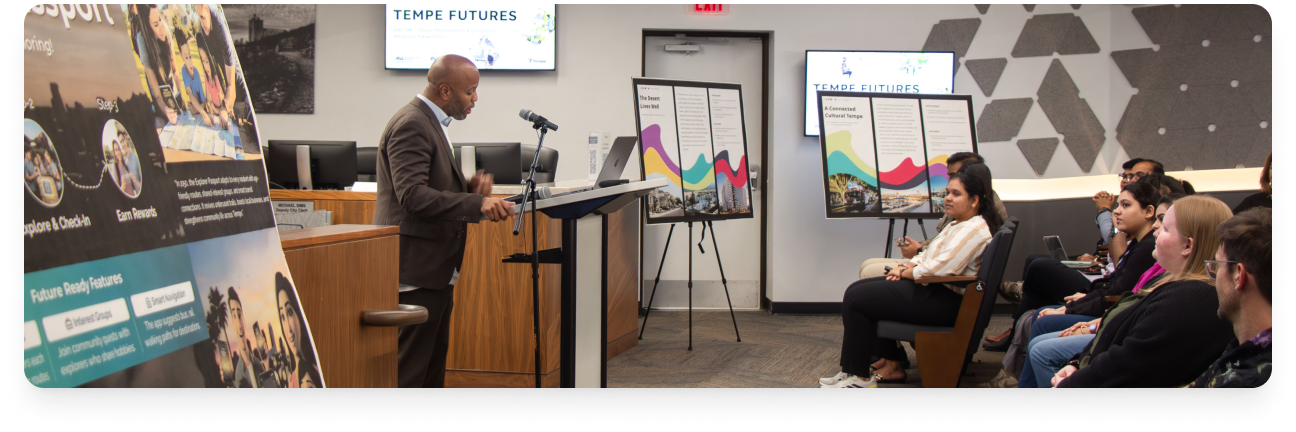
Engagement with Mayor Corey D. Woods. 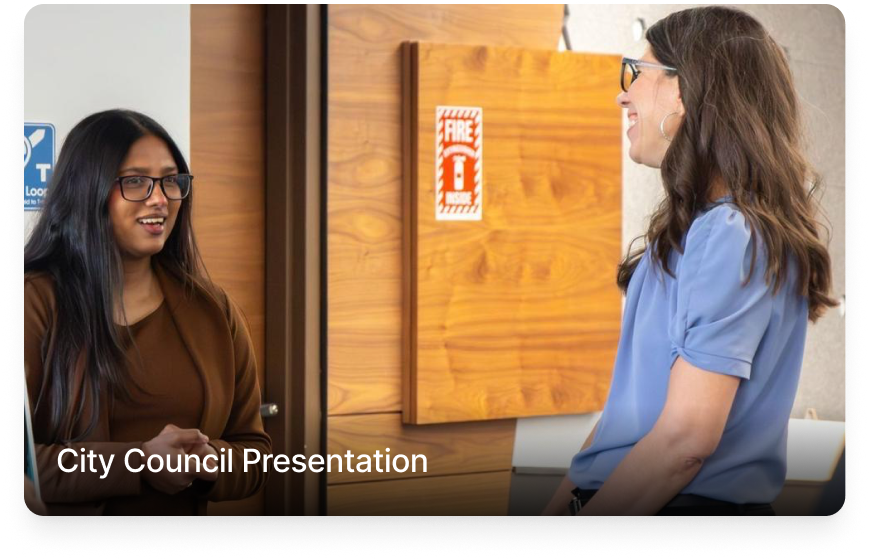
Final presentation at City Hall (Dec 7).
"This project gave our community a voice in shaping the future of Tempe. The scenarios presented are both ambitious and achievable."
"This made me think about my grandkids' future in a whole new way."
City of Tempe needed 300+ diverse community members engaged in 2050 long-range planning. Traditional methods weren't working.
Dual-role designer and researcher — Pop-Up Coordinator and Career Focus Strategist — under Prof. Andrew Whitcomb, City of Tempe Project Cities.
6 community interventions across 4 months. 127 signals → 2 scenarios → city council presentation.
350+ engaged, 85% survey completion, 100% city buy-in, informed 2025 budget priorities.
- "Facilitating a community event is a design act. Every activity, prompt, and physical layout is a UX decision."
- "The e-waste concept emerged from listening — not from a brief. That's the real value of participatory design."
- "Working with city officials taught me how to translate design outcomes into language that drives policy decisions."